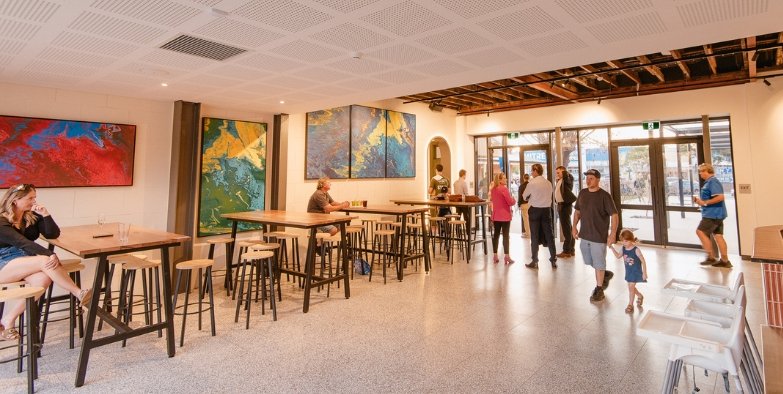
The Exchange Hotel is a cherished historical landmark on Pinjarra’s main street and one of the oldest buildings in the Peel Region.
Built in 1866 as a doctor’s residence, the building became a tavern and hotel in 1871. Following its closure in 2008, the site remained vacant for more than a decade before the Shire of Murray purchased and led a major redevelopment in partnership with Government and the private sector.
The Exchange Hotel reopened in 2024, fostering community connection, boosting tourism, enhancing the economic prosperity of the Murray and Peel Regions, and contributing to WA’s broader tourism industry.
Project cost
$8.8 million
The redevelopment was made possible through funding from the Australian Government ($2.34 million), the Western Australian Government ($100,000), a substantial investment by the Shire of Murray, and additional contributions from Karl and Janine Bullers for the venue's fit-out.
Project timeframe
Secured experienced publicans, Karl and Janine Bullers.
What was the problem or opportunity being addressed?
- Following its closure in 2008, the Exchange Hotel fell into disrepair and became a source of ongoing community concern. Its condition detracted from the appearance of Pinjarra’s main street and undermined the town’s sense of place, particularly given the community’s strong connection to local built heritage.
- The Shire of Murray recognised the site’s potential to act as a catalyst for town centre revitalisation and purchased the property in 2012. Guided by community feedback, the redevelopment became a strategic priority, with the opportunity to preserve the building’s heritage value while transforming it into a vibrant regional destination.
- Additionally, in 2020, the Murray Region faced high unemployment and limited job opportunities, with Pinjarra identified among the most socio‑economically disadvantaged areas in WA. Addressing these challenges formed a key part of the Shire’s place‑based economic development approach.
How the project addressed the problem or opportunity
- In 2020, the Shire’s administration presented a proposal to Council to explore redeveloping the Exchange Hotel, which was endorsed. This decision enabled the Shire to progress detailed planning, feasibility and designs to lead the redevelopment of the site.
- In 2021, the Shire engaged an economic consulting firm, hospitality professionals and architects to prepare a redevelopment vision, concept plans and a business case. As part of this process, the Shire undertook detailed consultation with community, hospitality experts and business strategists to inform future plans. With input from community, the formal vision for the Exchange Hotel was born.
- Economic modelling identified the project’s potential to deliver up to $57.5 million in new economic output within the first five years of operation. This evidenc base supported advocacy efforts and helped secure $2.34 million in Australian Government funding.
- The Shire then launched a competitive expression of interest process, widely promoting its vision for the site and Pinjarra’s potential. The process sought experienced hospitality professionals who shared the vision for the Exchange Hotel. Following independent peer review of shortlisted proposals, the Shire partnered with Karl and Janine Bullers to operate the venue.
Project outcomes
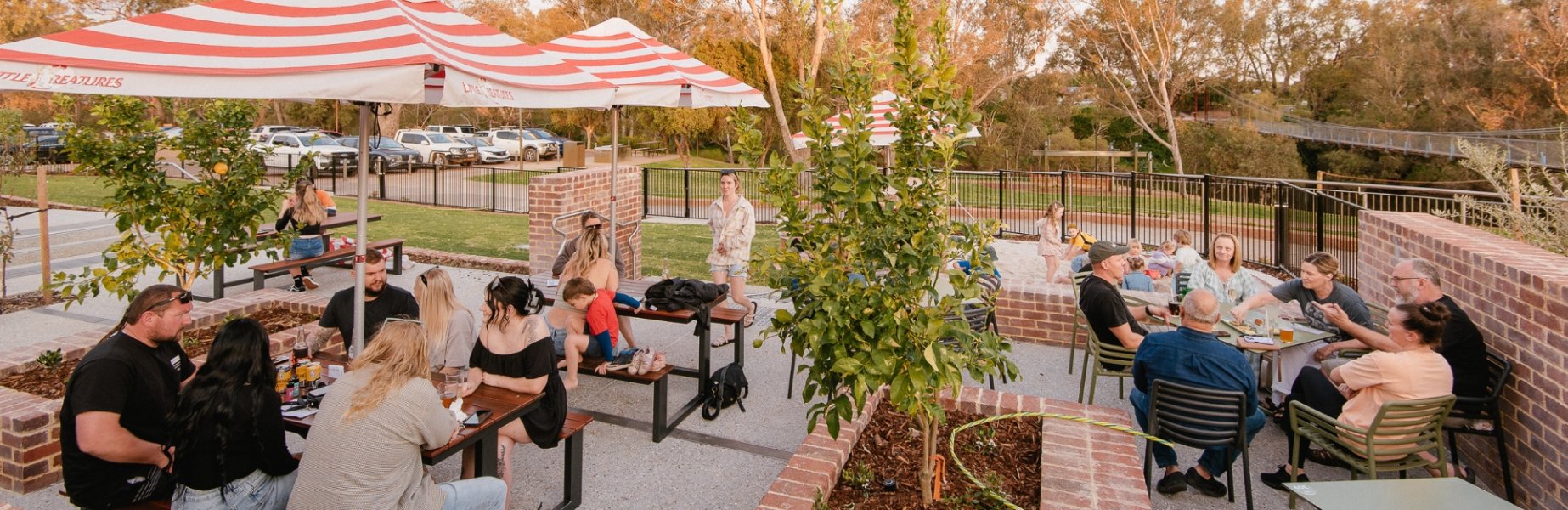
- Since reopening in September 2024, the Exchange Hotel has become a major driver of activity in Pinjarra’s town centre. Operating at capacity, the venue has increased foot traffic and supported surrounding businesses, with its limited onsite parking encouraging pedestrian movement throughout the precinct. A key stop on the Pinjarra Heritage Walk Trail, the Hotel also attracts heritage tourists.
- Within its first month, the Hotel welcomed more than 20,000 visitors, served 15,000 pints of beer and 13,600 meals, and created 69 jobs (40 FTE), making it one of Pinjarra’s largest employers. Local businesses have reported increased trade, and some regional producers have expanded capacity in response to demand generated through the Hotel.
- The addition of a small-batch distillery producing shiraz gin, plum gin, cherry vodka, and other spirits using local botanicals, fruits, and wines has further strengthened connections within the business community. By partnering with regional producers and distributing its artisanal spirits to venues in Fremantle, the distillery has expanded Pinjarra’s reputation, attracting niche-market visitors and promoting agri-tourism.

Lessons learnt
- Early and ongoing consultation was essential
- Balancing heritage with modern needs required creative thinking
- Adaptability was key
- A robust business case is crucial, and
- Clear communication kept stakeholders and the community engaged.